


Fulfillment logistics has become a key process for many companies because it directly connects order management, stock availability, service quality, and end-customer satisfaction. In a context where sales channels are multiplying and expectations around delivery times are increasing, simply having a warehouse is no longer enough: companies need a system that can receive goods, manage inventory, prepare orders, pack them, ship them, and handle any returns.
When we talk about fulfillment logistics, we refer to the set of activities that make order fulfillment accurate, traceable, and scalable. In this guide by Savino Del Bene, we explain what fulfillment logistics is, how it works, when it is useful, and which criteria to consider when choosing a specialized partner.
Fulfillment logistics: what it is and what it involves
Fulfillment logistics is the end-to-end process that turns an order into an actual delivery. It includes all activities that begin with goods receipt and continue through final shipment to the customer, including inventory management, order preparation, packing, tracking, and reverse logistics.
The definition of fulfillment, therefore, does not simply coincide with “preparing a package.” It is a broader process that integrates logistics, technology, quality control, and operational coordination. Order fulfillment logistics requires up-to-date information on stock, orders, locations, priorities, and shipments in order to reduce errors, delays, and manual activities.
Fulfillment can be managed internally or outsourced to an external logistics partner. The choice depends on volumes, markets served, product type, process complexity, and expected service level. In any case, the goal remains the same: making order fulfillment more efficient, reliable, and measurable.
How fulfillment works: main stages and operational activities
To understand how fulfillment logistics works, it is useful to look at the main operational stages of the process. Each stage must be coordinated with the others, because an upstream error can affect stock, preparation, shipping, and customer experience.
The main activities of the fulfillment logistics process are:
- Goods receipt: products arrive at the warehouse or fulfillment center, are checked, recorded in the system, and made available;
- Storage and inventory management: goods are placed in defined locations so they can be quickly found;
- Order processing: the order is acquired from the customer’s system, e-commerce platform, ERP, or other channels and converted into operational activities;
- Picking and packing: products are picked, checked, packed, labeled, and prepared for transport;
- Shipping and tracking: the order is handed over to the carrier or inserted into the planned distribution flow, with progress monitoring;
- Returns management and reverse logistics: returned products are received, checked, qualitatively assessed, and put back into stock when possible.
In an effective fulfillment logistics service, it is not enough for the order to leave the warehouse: it is important to monitor the shipment status and respond quickly in the event of anomalies. Returns management is also an integral part of the process, as it helps recover value, improve the customer experience, and keep inventory reliable.
Fulfillment center: what it is and how it differs from a traditional warehouse
A fulfillment center, or order fulfillment center, is not simply a warehouse where goods are stored. It is a structure organized to dynamically manage the order cycle: receiving, storage, picking, packing, shipping, returns, and value-added services.
The main difference compared to a traditional warehouse lies in its operational purpose. A warehouse may be primarily focused on storing goods, while a fulfillment center is designed to move orders out quickly and accurately, often managing variable volumes, demand peaks, multiple channels, and specific requirements by customer or product. For this reason, a fulfillment center must combine physical space, processes, technology, and qualified personnel. It does not simply store products; it makes them available at the right time, in the correct configuration, and with the information required for transport and delivery.
When managed by a 3PL partner, the fulfillment center can be part of a broader logistics network, integrated with international transport, local distribution, customs services, and customized activities. This is especially useful for companies operating across multiple markets or needing a scalable solution without investing directly in infrastructure, systems, and personnel.
When fulfillment is useful for companies
Fulfillment logistics becomes particularly useful when order management requires more control, speed, and scalability. This often happens during growth phases: order volumes increase, sales channels multiply, new markets open, and it becomes more difficult to manage everything with manual or non-integrated processes.
One of the most common cases is e-commerce fulfillment, where orders are numerous, fragmented, and often subject to seasonal peaks. However, fulfillment is not limited to B2C e-commerce: B2B companies, retailers, and manufacturers may also need to manage complex orders, promotional kits, point-of-sale materials, spare parts, customized products, or multi-country distribution.
The main benefits of fulfillment logistics include:
- Greater stock visibility: thanks to updated systems and traceable processes;
- Higher order preparation accuracy: with fewer picking and packing errors;
- More predictable fulfillment times: even during peaks or high-volume periods;
- More standardized processes: useful for improving quality and operational continuity;
- A more consistent customer experience: thanks to reliable deliveries, tracking, and returns management;
- Greater scalability: especially for companies that are growing or operating across multiple markets.
For international companies, the value increases when fulfillment is integrated with transport, customs, and distribution. Structuring or outsourcing fulfillment is therefore worthwhile when the order is no longer an isolated activity, but a process that requires continuity, control, and adaptability.
Fulfillment optimization: technology and data
Fulfillment optimization increasingly depends on the ability to use technology and data to make the process visible, controllable, and measurable. A correctly prepared order is the result of updated information, integrated systems, and clear procedures.
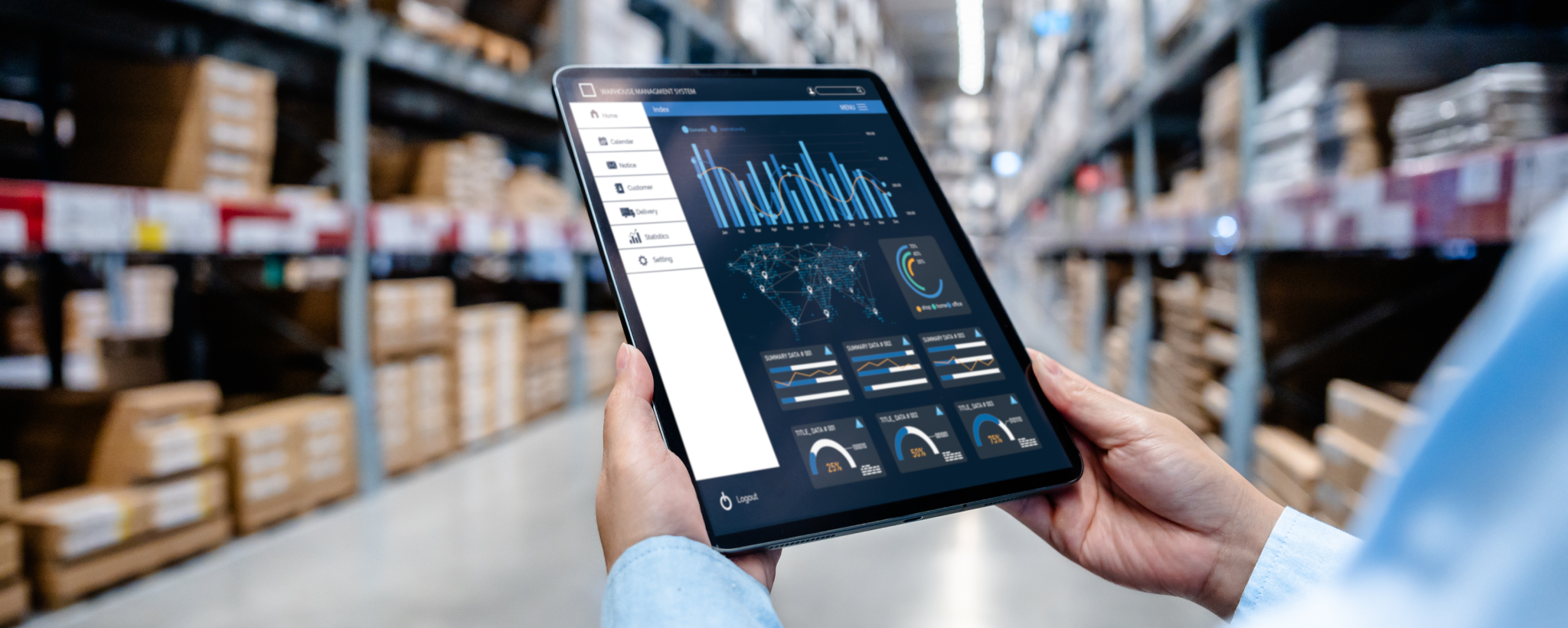
One of the main tools is the WMS (Warehouse Management System), the software that manages warehouse activities: receiving, locations, stock, picking, packing, movements, and order progress. An effective WMS enables timely communication of events and operational stages, reducing picking errors, inventory discrepancies, and preparation delays.
Alongside the WMS, customer-dedicated portals or dashboards can be used to check the progress of activities, monitor order preparation, and manage quality assessments, for example in the case of returns. This transparency helps turn fulfillment from an invisible process into a controlled and shared flow.
In practical terms, technology and data can support fulfillment through:
- Dedicated customer portals: to check the progress of activities;
- Timely updates on order preparation: useful for monitoring priorities and possible exceptions;
- Integrated WMS software: able to communicate events and operational stages promptly;
- Quality control tools: including for returns assessment;
- Cameras at operational workstations: useful for monitoring and documenting sensitive activities such as packaging and packing;
- Integration with ERP, OMS, e-commerce platforms, and tracking systems: to reduce manual interventions and information misalignments.
To evaluate performance, it is useful to monitor KPIs such as order accuracy, picking accuracy, average fulfillment time, shipment punctuality, stock accuracy, return rate, and cost per order. These are operational metrics, but they directly affect the quality perceived by the end customer.
How to choose a fulfillment logistics partner
Choosing a partner for fulfillment logistics means evaluating much more than warehouse space availability. An effective provider must ensure solid processes, technology, qualified personnel, the ability to manage peaks, and expertise suited to the type of product and market served.
The main criteria to consider include:
- Operational experience and vertical expertise: different products require different skills, for example in control, packaging, labeling, traceability, or returns management;
- Technology and visibility: customer portals, integrated WMS, timely updates, reporting, and exception management allow companies to maintain control over the process;
- Peak management and scalability: a good partner must be able to absorb volume fluctuations, seasonality, promotional campaigns, or product launches without compromising timing and accuracy;
- Value-added services: activities such as labeling, kitting, RFID tagging, customized packaging, quality control, and reverse logistics support compliance, traceability, and product presentation;
- Integration with transport and customs: for companies that import, export, or distribute across multiple countries, fulfillment must interact with international transport, customs clearance, customs warehouses, and bonded warehouses;
- Quality of personnel and processes: clear procedures, training, and specific expertise are essential to manage different products, customers, and requirements.
A partner focused only on e-commerce may effectively cover picking, packing, and shipping, but a broader logistics partner can also integrate customs activities, international transport, advanced warehousing services, and customized solutions. This difference is relevant when fulfillment does not only concern delivery to the end customer, but the entire supply chain. In this context, Savino Del Bene can support companies with integrated logistics solutions that combine operational expertise, an international network, customs services, transport, warehousing, and customized activities.
Conclusion
Do you want to make order management more efficient, improve stock visibility, and ensure more reliable deliveries? Structuring a scalable fulfillment logistics process means working on technology, procedures, operational expertise, and integration with the rest of the supply chain.
Savino Del Bene, through its specialized Logistics division, provides a network of dedicated sites and qualified personnel, with experience in managing different products, customers, and processes. The ability to integrate fulfillment, customs services, international transport, value-added activities, and customized solutions allows companies to be supported even in the presence of high volumes or operational peaks, while maintaining focus on on-time deliveries, fast order preparation, and reduced fulfillment times.
If you want to identify the solution that best fits your supply chain needs, you can explore our integrated logistics services. Contact your local Savino Del Bene representative today for a dedicated consultation.